How to Withdraw Crypto From an Exchange Safely, Step by Step
Moving coins from an exchange to your own wallet is where beginners make their most expensive mistakes. This walkthrough covers networks, test transfers, and the errors that cannot be undone.
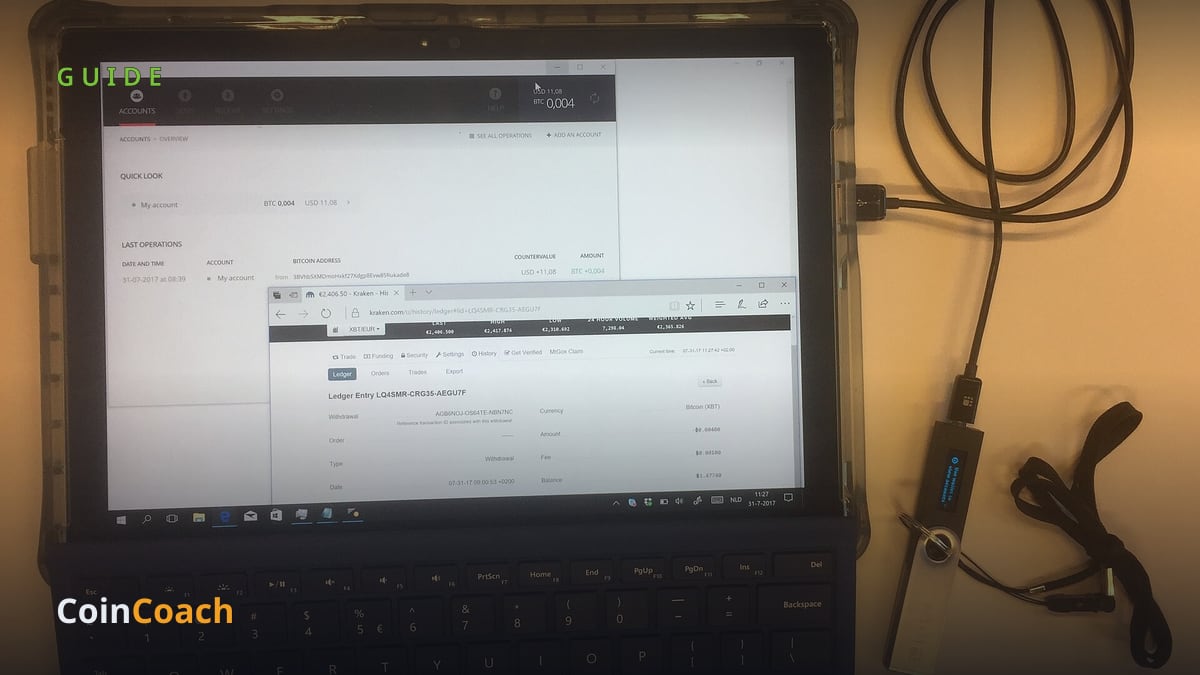
Photo: FlippyFlink, CC BY-SA 4.0, via Wikimedia Commons
Sooner or later, most crypto holders move coins off an exchange — into a hardware wallet for long-term storage, to another platform, or to pay someone. It is a routine operation that beginners rightly find nerve-racking, because blockchain transfers are irreversible: there is no fraud department, no chargeback, and no customer support line that can claw back coins sent to the wrong place. This guide walks through the process in the order that prevents the expensive mistakes.
Step 1: Know where the coins are going
Before touching the exchange, have your destination ready. If it is your own wallet, that means your wallet app or hardware device is set up, your recovery phrase — the words that can restore the wallet if the device is lost — is written down and stored offline, and you can see the receiving address. If you have not chosen a custody setup yet, our hot versus cold wallets guide covers the trade-offs.
Get the receiving address from the destination itself — your wallet's "receive" screen — never from an email, a chat message, or a website's support page. Scammers routinely circulate lookalike addresses.
Step 2: Match the network — the mistake that loses funds
Many coins exist on several networks. USDC, for example, circulates on Ethereum, Solana, Base, and others, and exchanges ask you to pick a network (sometimes labeled "chain") at withdrawal time. The rule is absolute: the network you withdraw on must match a network the destination supports. Coins sent on the wrong network can be unrecoverable, depending on the wallet at the other end.
Two related traps deserve mention. Some assets — notably XRP, XLM, and ATOM — use a destination tag or memo, an extra code that exchanges require to credit your deposit; omitting it can strand funds in support-ticket limbo. And token tickers can be deceiving: "wrapped" or bridged versions of a coin are not the same asset as the native one.
Step 3: Verify the address — all of it
Copy and paste the address, then check it. Clipboard malware — malicious software that silently swaps a copied crypto address for an attacker's — is a real and common threat. Compare the first six and last six characters between the destination's receive screen and the exchange's withdrawal field. If you are sending to a hardware wallet, confirm the address on the device's own screen, which malware on your computer cannot alter.
Step 4: Send a test transfer first
For any meaningful amount, send a small test first — enough to confirm the route works, even if fees make it slightly wasteful. Wait until the test arrives and is spendable at the destination, then send the remainder to the same verified address. Professionals managing large treasuries do exactly this; the few dollars in extra fees are the cheapest insurance in crypto.
Step 5: Expect the exchange's own friction
Exchanges add safety layers of their own: withdrawal addresses may need to be added to an allowlist hours before use, two-factor authentication and email confirmations are standard, and newly deposited fiat often triggers a holding period before crypto can leave. These delays are mildly annoying and genuinely protective — they are also why securing your exchange account itself matters, which we cover in our account security guide.
The mistakes that cause real losses
- Sending on a network the destination does not support
- Omitting a required memo or destination tag
- Trusting a pasted address without checking for clipboard tampering
- Skipping the test transfer to save a few dollars in fees
- Sending the entire balance in transaction one, then discovering the error in transaction two
Take the extra ten minutes; the process rewards slowness. This guide is for educational purposes only and is not financial advice.

CoinCoach publishes clear, trustworthy cryptocurrency and blockchain news, guides, token breakdowns, and reviews.
Related Stories
Bitcoin Halving Cycles: What History Shows and What It Doesn't

CBDCs vs. Crypto: What a Digital Dollar (or Loonie) Would Really Be