
Reuters: Trump Family Crypto Ventures Earned $2.3 Billion as Investors Lost a Similar Amount
A Reuters investigation tallies at least $2.3 billion flowing to the Trump family from crypto ventures since 2024, while buyers of the associated tokens and stocks absorbed losses of roughly the same size.
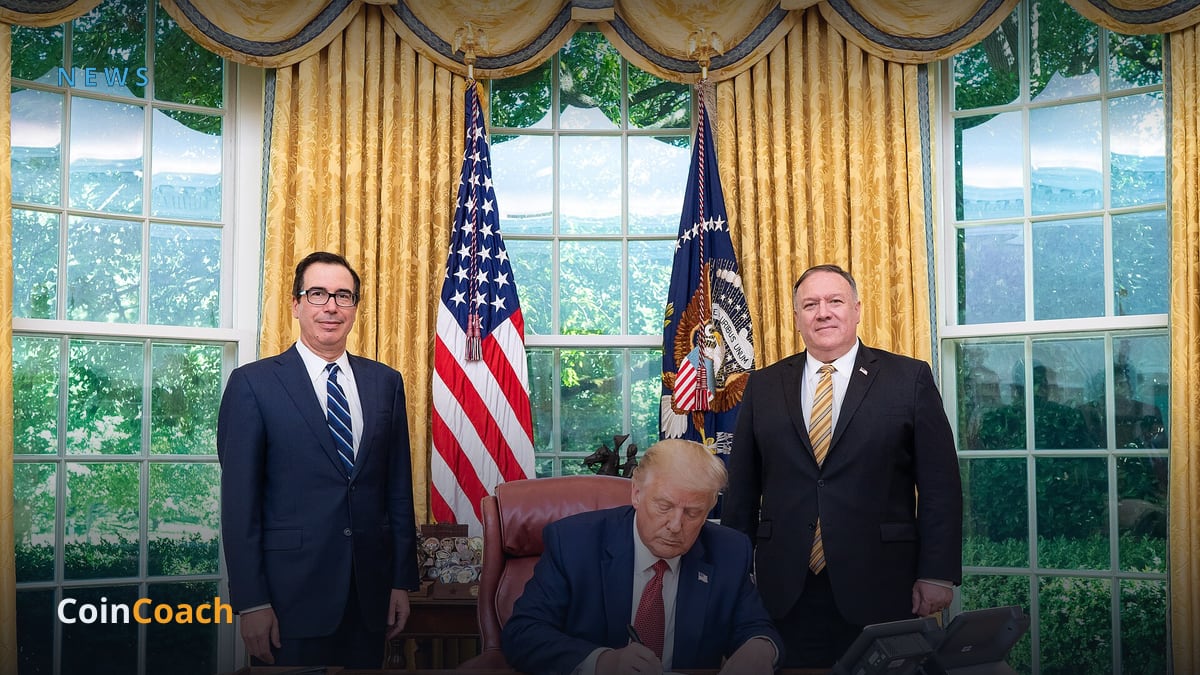
Photo: The White House (Official White House Photo by Tia Dufour), Public domain, via Wikimedia Commons
A Reuters investigation published June 9, 2026 estimates that ventures tied to US President Donald Trump and his family have added at least $2.3 billion to the family's fortune since mid-2024 — while the investors who bought into those ventures have absorbed losses of roughly the same amount.
What the investigation found
Reuters examined the main crypto businesses connected to the family and traced both the money flowing in and what happened to the people on the other side of the trades.
The largest single source was World Liberty Financial, the family's flagship crypto venture, whose token sales raised more than $1.4 billion; the family was entitled to the large majority of that revenue under the project's terms. Reuters estimates that buyers of the project's tokens were sitting on losses of roughly $674 million after prices fell from early levels.
The $TRUMP memecoin, launched in January 2025, generated about $1.2 billion in sales, of which the family's share was roughly $616 million. Investors who bought the coin near its highs have lost more than $700 million on paper, according to the report.
A third strand involved ALT5 Sigma, a publicly traded company that agreed in 2025 to buy $1.5 billion of World Liberty tokens, entitling the family to roughly $500 million in proceeds. The company's shares have since fallen more than 90 percent. A Trump-linked Bitcoin mining venture's investors also recorded losses of over $200 million.
The pattern Reuters describes
The report's central finding is structural: in each venture the family risked little of its own capital — startup costs were sometimes under $1 million — and was compensated in tokens, revenue shares, or equity for lending its name and promotion. Buyers supplied the capital, and when prices fell after the initial enthusiasm, the losses landed on more than a million investor accounts, by Reuters' count.
It is worth being precise about what that does and does not establish. Selling something whose price later falls is not, by itself, unlawful, and the report does not allege that these ventures broke specific laws. The White House and the ventures involved have previously described the family's crypto businesses as legitimate private enterprise. What the tally documents is an unusually one-sided distribution of outcomes between insiders and the public buyers of the assets.
Why it matters to ordinary readers
Celebrity- and politics-linked tokens are a recurring corner of the crypto market, and this is the largest documented case study of how they tend to work: the named figures are typically paid in ways that do not depend on the token's long-term performance, while buyers carry all of the price risk. The episode also feeds an active policy debate, since the same administration shaping US crypto regulation benefits personally from crypto ventures — a conflict-of-interest question that lawmakers from both parties have raised.
None of this predicts where any token's price goes next. It is a reminder to ask, before buying any asset attached to a famous name, who gets paid, when, and whether their payday depends on yours.
Sources

CoinCoach publishes clear, trustworthy cryptocurrency and blockchain news, guides, token breakdowns, and reviews.
Related Stories

The Biggest IPO Wave in History Is Coming — and It's Competing With Bitcoin for Capital

Big US Banks Plan a Tokenized Deposit Network to Answer the Stablecoin Boom