
Congress Debates How Far Crypto Tax Relief Should Go Beyond Stablecoins
A House tax committee hearing on June 9 weighed seven draft bills covering small-transaction relief, staking income timing, and whether paying with regulated stablecoins should be treated like paying with cash.
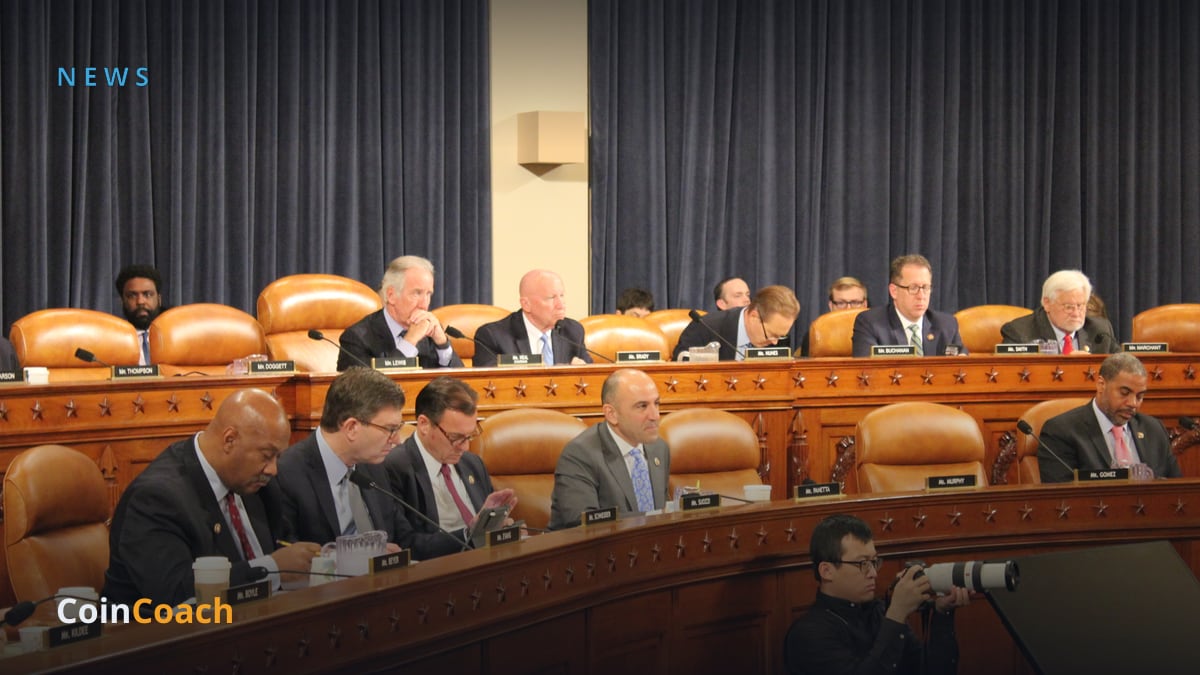
Photo: Office of Rep. Jimmy Panetta, Public domain, via Wikimedia Commons
The US House Ways and Means Committee held a hearing on June 9, 2026 on how digital assets should be taxed — the most focused look Congress has taken at the question since the stablecoin framework became law last year. Ahead of the session, the committee circulated seven discussion-draft bills covering everything from tiny everyday payments to mining and staking income, with public comments open through June 23.
The problem the hearing is trying to solve
US tax rules treat cryptocurrency as property, not currency. That means every disposal — selling, swapping one coin for another, or spending crypto on a coffee — is technically a taxable event requiring the user to calculate a gain or loss against their cost basis, the amount originally paid. The IRS requires these transactions to be reported whether or not they produce a gain. For everyday payments, the bookkeeping burden alone makes crypto impractical as money, which is precisely the use case Congress blessed for stablecoins in 2025's GENIUS Act.
The hearing's central tension is scope. One approach would grant relief narrowly: payments made with regulated, dollar-pegged stablecoins would be treated like cash, on the logic that a token designed never to change in value produces no meaningful gain anyway. A broader approach, long championed by Senator Cynthia Lummis, would create a de minimis exemption — a threshold below which small transactions in any cryptocurrency are simply ignored for tax purposes. Her proposal sets that line at $300 per transaction, capped at $5,000 of exempted gains per year.
Who testified and what else is on the table
Witnesses included representatives from Fidelity Investments, Coinbase, the advocacy group Coin Center, and NYU Law's Tax Law Center — a mix of industry voices favoring broad relief and tax-policy specialists warning about loopholes. Beyond small payments, the draft bills address when mining and staking rewards should be taxed (at receipt versus at sale), whether crypto should be subject to wash-sale rules — the restriction that stops stock investors from selling at a loss and immediately rebuying to harvest a tax deduction, which currently does not apply to crypto — and how charitable donations of digital assets are valued.
It is worth being clear about what the hearing was not: a vote. Discussion drafts are an early stage, and any actual change must pass both chambers. But Ways and Means is where US tax law starts, and seven coordinated drafts signal serious intent.
Why it matters — including outside the US
For American users, a de minimis rule would remove the most common everyday absurdity in crypto taxation. For Canadians, nothing changes directly — the CRA's rules, which we cover in our Canadian crypto tax guide, treat crypto as a commodity with no small-transaction exemption — but US policy tends to shape the conversation in Ottawa. If the world's largest market decides spending crypto should not require a capital-gains calculation, pressure for similar treatment elsewhere will follow.
Sources

CoinCoach publishes clear, trustworthy cryptocurrency and blockchain news, guides, token breakdowns, and reviews.
Related Stories

The Biggest IPO Wave in History Is Coming — and It's Competing With Bitcoin for Capital

Big US Banks Plan a Tokenized Deposit Network to Answer the Stablecoin Boom