
Crypto Industry Presses the Senate on the CLARITY Act — but Bettors Doubt a Quick Vote
More than 200 crypto firms and groups urged Senate leaders to schedule a floor vote on the market-structure bill, while prediction markets price falling odds that it passes before August.
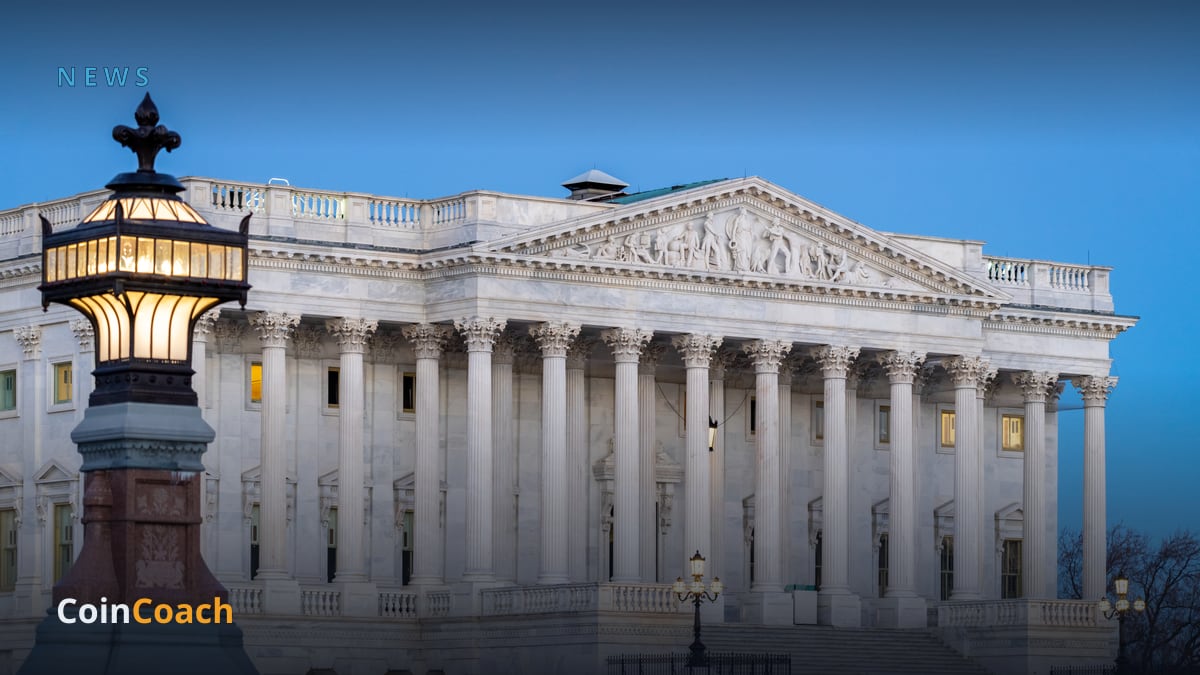
Photo: Architect of the Capitol (USCapitol, Washington, D.C.), Public domain, via Wikimedia Commons
The crypto industry is making a coordinated push to get the CLARITY Act over its next hurdle. On June 7, more than 200 companies and advocacy groups — including Stand With Crypto, the Blockchain Association, and the Crypto Council for Innovation — sent a letter to Senate leadership urging a floor vote on the market-structure bill without delay, arguing that continued uncertainty pushes digital-asset business offshore.
Where the bill stands
The Digital Asset Market Clarity Act would settle the basic question of who regulates which crypto tokens, routing oversight of "digital commodities" largely to the Commodity Futures Trading Commission while leaving investment-contract tokens with the Securities and Exchange Commission. As we covered in our earlier explainer, the House passed the bill in July 2025, and the Senate Banking Committee advanced it on May 14, 2026 by a bipartisan 15-9 vote.
Since then, however, the bill has sat in the queue. Senate leadership has not publicly committed to floor time, and the legislative calendar in an election year is crowded with budget, appropriations, and national-security business that outranks it.
What the prediction markets say
The industry's public optimism is not matched by people betting real money on the outcome. On Kalshi, a US-regulated prediction market, the contract on market-structure legislation passing before August fell from roughly 40 percent to about 22 percent between June 3 and June 8. On Polymarket, the odds of passage at any point in 2026 slipped from the low 60s to around 51 percent over the same stretch.
Institutional handicappers have moved the same direction: Galaxy Digital trimmed its 2026 passage estimate from 75 to 60 percent, citing the Senate calendar, while JPMorgan analysts put the odds below half. A prediction market lets traders buy contracts that pay out if an event happens, so prices work like live probabilities — and right now those prices say "maybe, but not soon."
The substance behind the delay
The skepticism is not only about scheduling. Consumer advocacy groups sent a competing letter opposing the Senate draft, arguing its anti-money-laundering provisions are too weak and flagging a loophole around stablecoin yield. Those objections matter to moderate senators in both parties whose votes would be needed, and resolving them could require amendments — which take time the calendar may not offer before the August recess.
For everyday crypto users, the practical takeaway is patience: the rules governing which agency oversees which token remain unsettled, and the stablecoin framework that became law in 2025 is still the only major piece in place. A bill with bipartisan committee support in both chambers is unusually far along by crypto-policy standards — but as the markets keep repeating, far along is not the same as done.
Sources

CoinCoach publishes clear, trustworthy cryptocurrency and blockchain news, guides, token breakdowns, and reviews.
Related Stories

The Biggest IPO Wave in History Is Coming — and It's Competing With Bitcoin for Capital

Big US Banks Plan a Tokenized Deposit Network to Answer the Stablecoin Boom